
Inside the Boone County Most Wanted Program
The Sheriff runs Wanted Wednesday through the official Boone County Sheriff Warrants page, working with Crime Stoppers of Central Indiana. It is a public-safety publication built from selected wanted matters. The page is not a live index. Boone Circuit Court, Superior Court I, Superior Court II, and Zionsville Town Court can each issue warrants, and most never make a poster. Read the current publication on the Sheriff's own page. Status can shift fast, through service, surrender, recall, or another court event. The Sheriff also warns against attempted apprehension. Verify anything you see with the proper agency before acting on it.
Boone Wanted Wednesday Explained
Crime Stoppers publishes a monthly poster featuring twelve wanted individuals. That number describes the poster's format. It says nothing about the size of Boone County's warrant inventory. The Sheriff's page may also post structures for Outstanding Warrants and Body Attachments & Promise to Appear PDFs when those files go up. Treat the program at the program level. Its date, category, warning, and verification directions all matter. Search results with alternate capitalization or an older `/Warrants/` path are not a second database. The canonical Sheriff page is the one to use, checked at the moment you need it.
Publication rule: Boone Wanted Wednesday is a dated, curated selection; absence from the poster is never proof that no warrant exists.
How Boone County Most Wanted Lists Work
A matter lands on a public poster because law enforcement picks it for publicity. The agency weighs its own priorities and the value of public tips. It publishes no complete selection formula. So a missing name does not mean a matter is less serious, and not every felony warrant gets included. Publications change after an arrest, a voluntary surrender, a court recall, or a routine update. The Sheriff says lists are updated regularly. That is not a promise of a real-time feed. Pair the date on the current material with direct agency confirmation. Archived screenshots and copied social posts can linger online long after status changes. If you are checking your own status, use Indiana MyCase to locate the case and the issuing court. Then take the Clerk, court, or Sheriff's in-person verification route rather than relying on the poster alone.
Boone County Most Wanted Safety Rule
The Sheriff's warning is direct. Do not attempt apprehension. A person shown in an official publication may be armed and dangerous, so never approach, follow, surveil, threaten, message, or try to detain anyone. Move to a safe place instead. Trained law enforcement decides how to act on the information. The official page carries that warning and the program details, and it stays the place to read them.
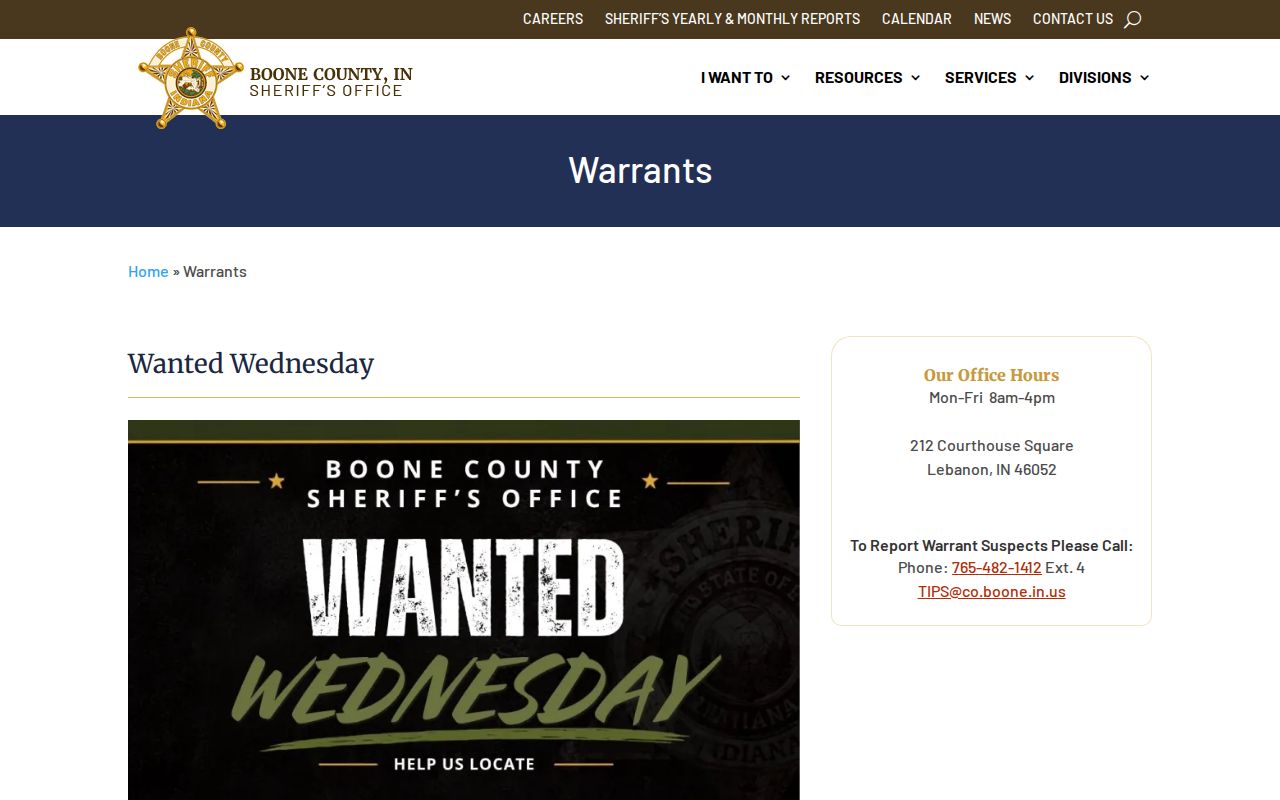
The official Sheriff page holds the program and its warning in context. Any current roster remains there, on the agency's own page. Call 911 for an immediate threat or emergency. For non-emergency tips tied to Wanted Wednesday, use the official Crime Stoppers or Sheriff tip channel.
Sending a Boone Most Wanted Tip Safely
Crime Stoppers of Central Indiana takes information at CrimeTips.org or by phone at 317-262-8477. The Boone Sheriff also lists 765-482-1412, extension 4, for warrant reporting. Pick the channel that fits the urgency.
- Do not make contact. Move away and note only what can be seen safely.
- Use Crime Stoppers for its anonymous tip process, or the Sheriff route identified on the official page.
- Give the place, time, direction of travel, and other useful facts without speculation.
- Retain any tip identifier the program provides for later reward follow-up.
- Step back. Do not post a live location or organize others to pursue the person.
Safe action: Report facts and disengage; Crime Stoppers may pay a reward, but no reward justifies confrontation, pursuit, or public identification.
Boone Crime Stoppers Reward Terms
Crime Stoppers may pay up to $1,000 for information leading to an arrest, according to the Boone Sheriff page. Read the fine print. "May" and "up to" are the limits, and a tip never guarantees payment. Follow the program's current terms and keep your anonymous tip identifier safe. The reward exists to support useful reporting while keeping the tipster out of direct enforcement. It is not a bounty to apprehend someone. Crime Stoppers or law enforcement decides how to assess what comes in. Do not announce a suspected location, repeat an allegation as fact, or publish copied personal details. The monthly poster and the reward statement describe one named Boone program. No office in Boone County runs a criminal-warrant roundup, amnesty day, safe-surrender week, or clearing event. A tax-warrant program is not criminal warrant relief, either.
How Most Wanted Differs From an Active Warrant
Most active warrants never appear in a publicity program. A most-wanted poster is a small, curated communications product. An active warrant, by contrast, is a court or law-enforcement status that may be public, restricted, recently served, or simply absent from the poster.
| Feature | Most wanted publication | Active warrant |
|---|---|---|
| Scope | Selected monthly public-safety material | Any warrant that remains legally in force |
| Source | Sheriff and Crime Stoppers | Issuing court and responsible agency |
| Public access | Official poster or page | May appear in a case or list, or remain restricted |
| Freshness | Dated snapshot | Changes through service or court action |
| Proper response | Send a safe tip | Verify one's own matter and seek legal help |
The Boone County active warrant search explains the broader verification chain.
Verifying Boone County Wanted Status
Boone County's Sheriff page offers no stable public name-search form, so treat any published listing only as a lead. The local self-check is spelled out in the FAQ: appear at the jail with proper identification. Warrant information is not given by telephone. That limit is firm, so do not ask a dispatcher to confirm a name. Indiana MyCase is a separate tool, searching public court cases by cause number, citation number, cross-reference number, or party name. It has no dedicated active-warrant field. Confidential, sealed, expunged, juvenile, and some older records are excluded. Read the court and chronological events closely. Then contact the Boone County Clerk or the issuing court to verify a warrant directly.
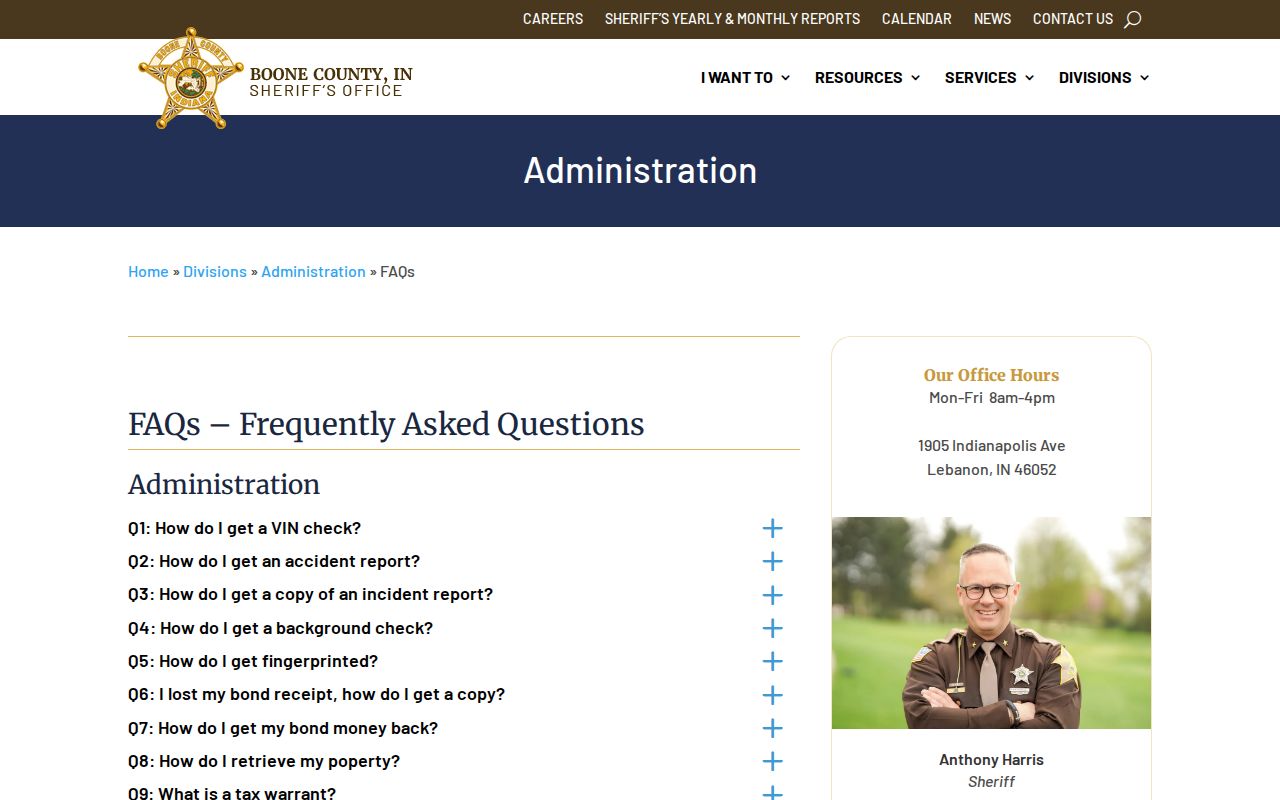
The Boone County FAQ confirms why a phone inquiry and a most-wanted poster are not full warrant status checks.
Boone County Poster Privacy Boundaries
Public access still carries a duty of care. Indiana court rules and the Access to Public Records Act keep restrictions in place for sealed, expunged, juvenile, investigatory, and sensitive information. Never copy complete birth dates, Social Security numbers, financial accounts, or other protected identifiers into notes or reposts. Posters also go stale fast. The responsible method is to link the current official source, cite its date, and leave personal images and roster entries with the agency that maintains them. Family members may use official channels to help someone understand a possible court matter. They should not intervene physically. They should not contact a person based on a poster. And removal from a list in Boone County does not prove the case has ended.
When You Believe You Are Listed
Do not wait for contact at your door, and do not try to negotiate through social media. Gather what you have: the cause number, any court notice, and your accurate legal name. An Indiana attorney can check the court record, identify the responsible court, explain bond or initial-hearing issues, and arrange a lawful voluntary surrender if needed. The Boone County Clerk maintains county court filings and can route a known case among Circuit Court and Superior Courts I and II. The Sheriff's in-person check covers the local law-enforcement side. None of the usual moves proves a recall, though. A poster disappearance, an online payment, a filed motion, or a tip-line conversation does not show that a warrant has been recalled. Recall means the issuing court itself has withdrawn the order.
Important: Seek counsel and official confirmation before surrendering; do not approach law enforcement casually or assume that payment has cleared the warrant.
Keep Boone County court orders, payment receipts, bond papers, and hearing dates. After each required step, confirm resolution with the issuing court.