
Boone County Warrant Searches
No single screen answers every Boone County warrant question. Start with Indiana MyCase, which searches public cases by case number, name, or attorney. Match what you find to Boone Circuit Court, Superior Court I, Superior Court II, or Zionsville Town Court. Then verify any warrant event with that court or the Boone County Clerk.
- Use a cause or citation number when one appears on the notice.
- If searching by name, enter the full legal name and narrow the court or date range.
- Read the case type, court, chronological entries, and hearing history.
- Write down the cause number and event date before contacting the Clerk.
- Follow the Sheriff's FAQ for an in-person status check with identification.
The Boone County Sheriff's Office does not give out warrant information by telephone. Its public Warrants page can carry selected notices or reports, but it is not a complete name-search database. A specific public-record request can seek an existing record, yet it is no substitute for a current warrant status check with the court.
Boone County Self-Check Route
Holding a court notice changes the task. You can skip the broad search. Start from the exact cause number, then compare the party name and the court listed. Indiana cause numbers encode the county, court, filing year, case type, and sequence. A pattern like 06D02-YY-XX-##### is only a shape; the actual number printed on the court paper controls. If MyCase shows a missed hearing or a warrant-related entry, do not assume the warrant is still active. Later entries may record service, a recalled order, a new hearing, or other case action, because "open" describes the case rather than the warrant. The Boone County Clerk can route a known cause number to the right court, and the issuing court controls its own order.
Best starting fact: A cause or citation number usually separates the right Boone County record from people with similar names.
What a Warrant Search Asks For
MyCase search fields look different from a dedicated warrant form because MyCase searches court cases, not a warrant index. Its search-tips page explains name tools, sounds-like matching, wildcards, and limits. A Boone County search should use only the identifying detail needed to find your own file or help a relative with a known matter.
| Field | Type | Required | Use |
|---|---|---|---|
| Case or citation number | Text | No | Most precise when copied exactly |
| Last name | Text | For name path | Supports exact, sounds-like, or wildcard search |
| First and middle name | Text | No | Narrows common-name results |
| Court | Filter | No | Select Boone courts when jurisdiction is known |
| Date range | Date | No | Reduces unrelated older cases |
The fields locate records. They do not guarantee that every confidential or newly issued Boone County warrant appears.
Boone County Name Matching Limits
A Boone County name search can miss a case for many reasons: spelling, a changed surname, a middle name, record age, court choice, or public-access limits. Sounds-like and wildcard tools broaden a query, though they can also pull in unrelated parties. Compare the entire public result, not just a matching name. The official Sheriff contact page shows how public-service calls are routed.
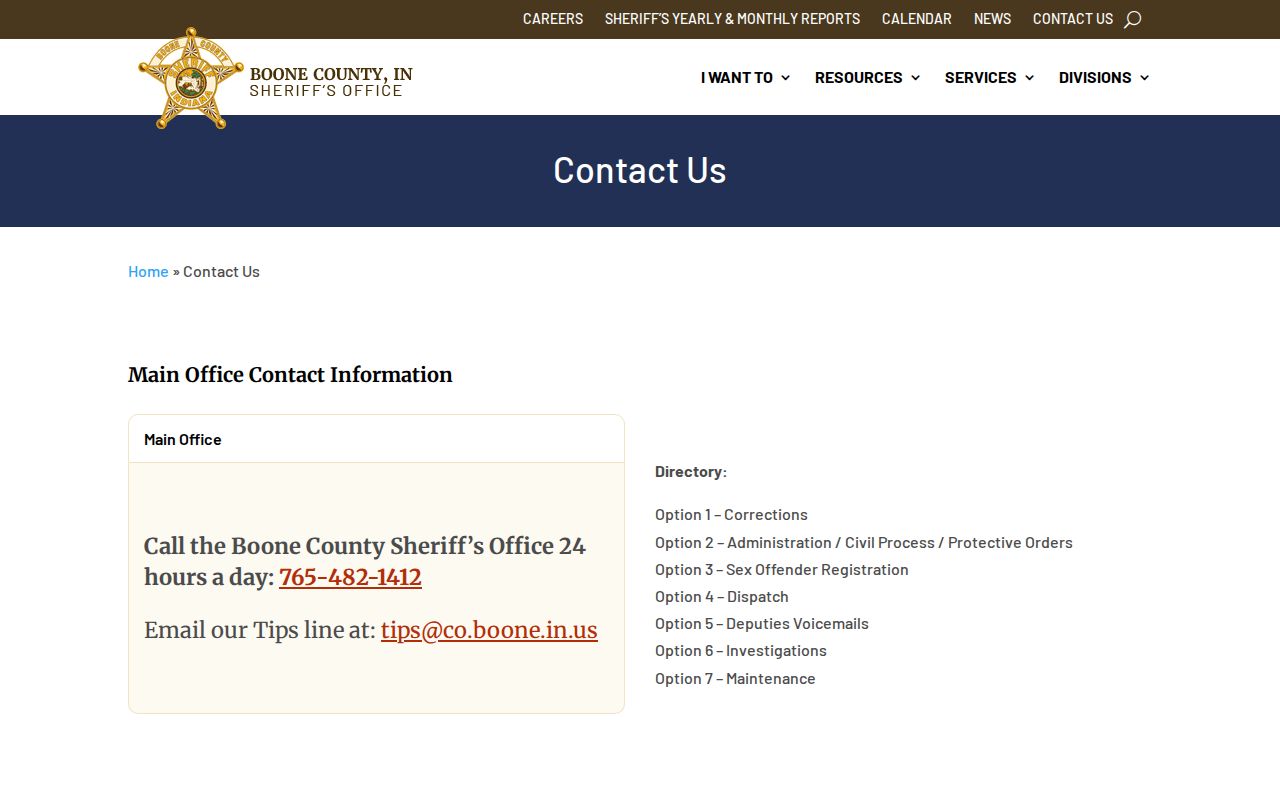
Calling the Sheriff works for general directions. The Boone County FAQ expressly withholds warrant status by phone, so a routine call is never a clearance.
Note: A no-result name search is not proof that no Boone County warrant exists.
Boone County Warrant Search Results
A Boone County result can give you the facts needed for official follow-up. Read the court and cause number first. Then review the case type, event description, date, and any later entry that changes the meaning of an earlier warrant event. Bond appears only if set and public.
| Cause number | The court file identifier used for contact and payment |
|---|---|
| Court | The Boone County court or current town court holding the matter |
| Case type | Criminal, infraction, ordinance, or another public category |
| Chronological entry | A hearing, FTA, warrant event, service, recall, or later order |
| Bond | An endorsed amount or hold when publicly available |
| Current status | A question to confirm with the responsible office |
A Boone County search returns process, not verdicts. A warrant and a charge are steps in a case, and only the court's judgment settles it.
MyCase Is Not a Warrant Database
MyCase gives statewide public court access, but it is not a live law-enforcement warrant index. A public case can show a warrant event without resolving present status. A warrant can also be absent because it is new, unserved and confidential, juvenile, sealed, expunged, older, or outside the selected court. The Sheriff's official FAQ sets the local verification rule for Boone County.
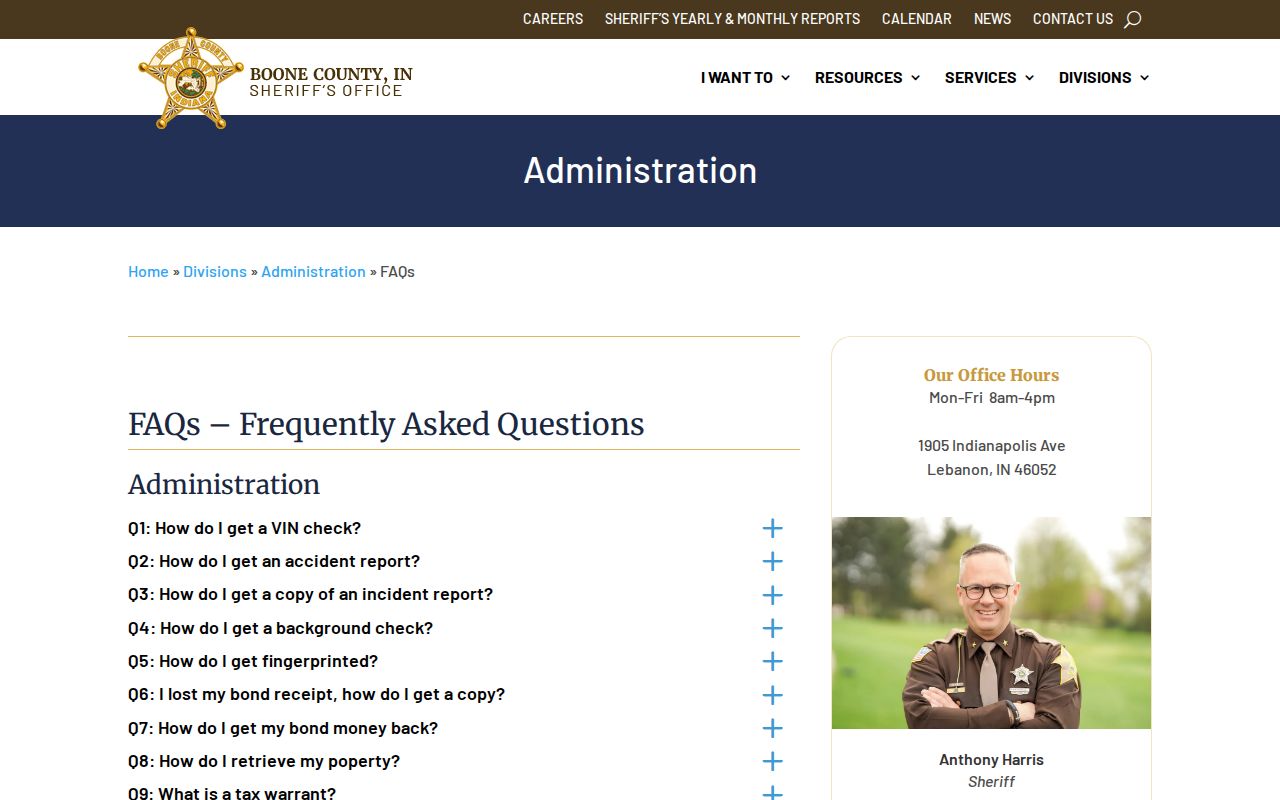
For your own status, take proper identification to the Boone County jail at 1905 Indianapolis Avenue in Lebanon. Confirm current access arrangements before going. Never send another person to approach law enforcement for you without legal advice.
Boone County Warrants: Who Holds What
Boone Circuit Court and Boone Superior Courts I and II all receive criminal filings under local rules, and Superior II also handles traffic infractions. Zionsville Town Court is the one limited-jurisdiction town court in the state Odyssey list. Lebanon City Court, Whitestown Town Court, and Thorntown Town Court are abolished, and no current Jamestown Town Court listing exists.
| Office | Record Role | Verification Role |
|---|---|---|
| Boone courts | Orders, hearings, and warrant events | Control court process and recall |
| County Clerk | Files, judgments, orders, and court money | Routes cause numbers and record requests |
| Sheriff | Curated publications and service records | In-person ID status check |
| MyCase | Public statewide case display | Starting point, not final warrant status |
Federal warrants sit outside all of these Boone County routes. The Southern District of Indiana and federal law enforcement handle those matters.
Boone County Records Request Option
Turn to a public-record request when you want an existing report, dated publication, or public filing. Boone County Sheriff Administration accepts requests through its NextRequest portal or in person, and it lists a $5 crash or case report fee, subject to current confirmation. Your request should identify the custodian, date range, case or incident reference, and delivery form. The official Boone Sheriff request portal opens at its landing page.
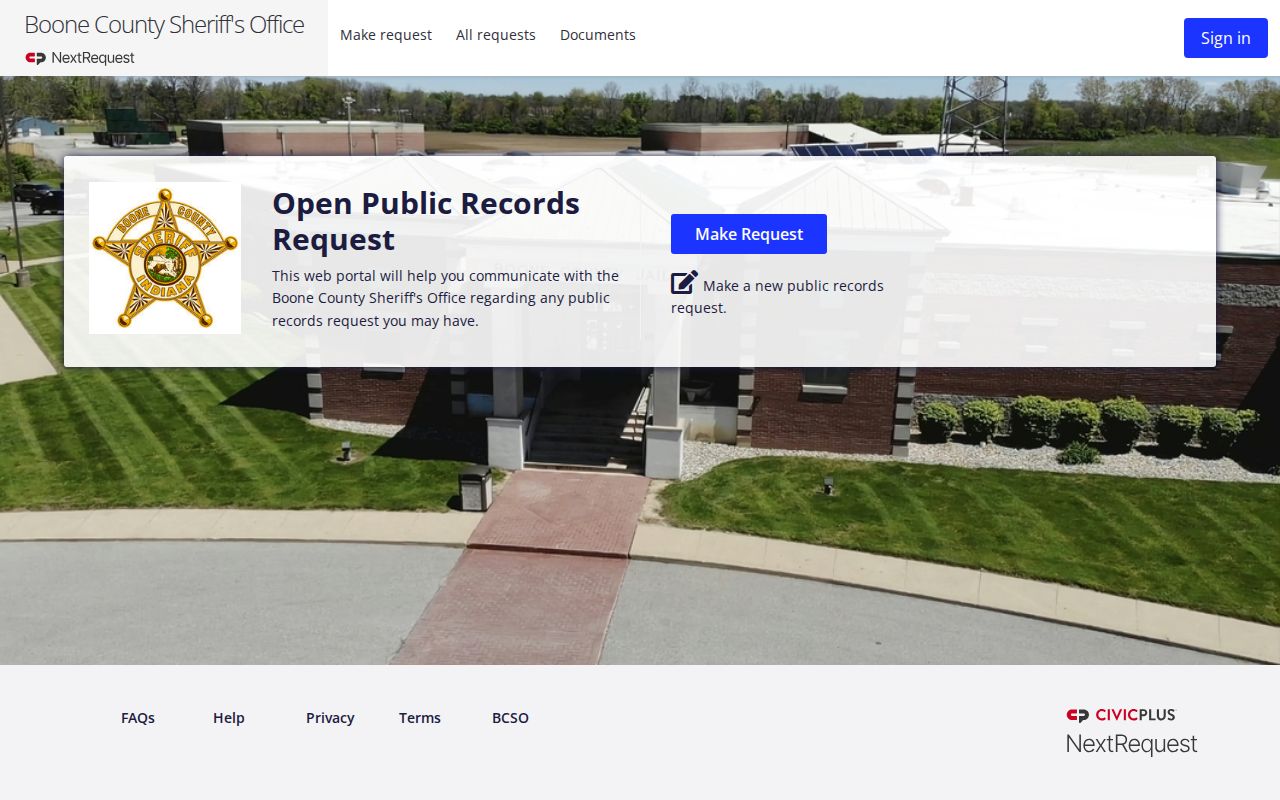
Do not ask a Boone County agency to build a complete warrant database. Ask for the precise record it maintains, and request segregable public parts if exemptions require redaction.
Which Warrants Stay Restricted
Indiana's public-access rules let some warrant records stay confidential. A judge may restrict an unserved arrest or search warrant when disclosure could defeat its purpose. Juvenile warrants and juvenile court records are generally confidential in Boone County. Sealed, expunged, investigatory, and sensitive records can also be withheld or redacted.
Indiana access rule: APRA provides access to public records, but it does not override a statute, court rule, or valid sealing order.
Full birth dates, Social Security numbers, account numbers, and other sensitive identifiers do not belong in a public search summary.
When Boone County officials deny a request or black out entries, that alone proves nothing. No hidden warrant can be inferred, because the access rule, not the case, decides what the public sees.
Boone County Request Administration
Sheriff Administration runs its own record-request process, separate from the jail's warrant-status check. Keep the two straight. A records request may return an existing public incident report. It cannot force a live warrant answer or make staff research one. For court filings, orders, judgments, and court money, the Clerk holds the county-level records. The official Administration page lays out how Boone County handles each request.
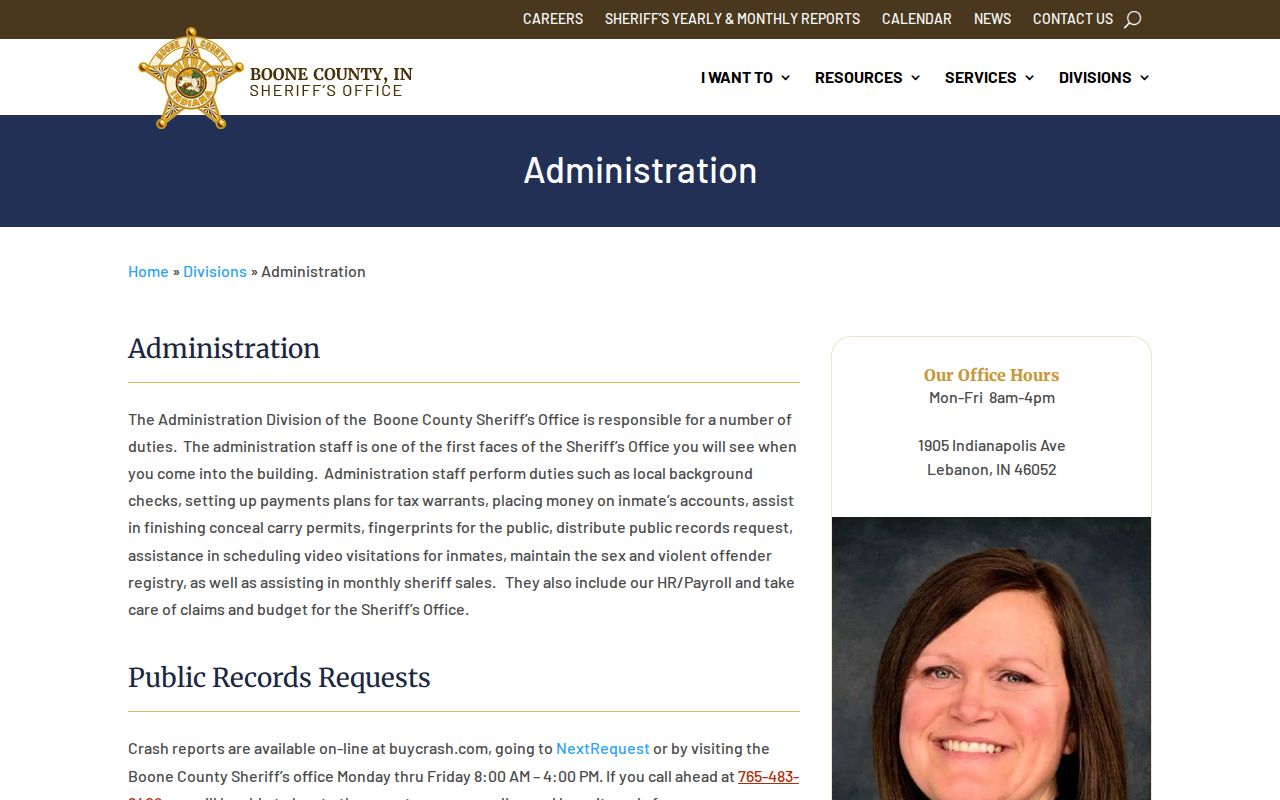
When a record turns up, write down its source and date. Then take questions about appearance, bond, counsel, payment, or recall straight to the issuing court. A receipt or a submitted request does not mean the warrant is cleared.